



Shandong Huashou Transmission Technology Co., Ltd. is one of the leading manufacturers and suppliers of full power-shift transmission in China. With abundant experience, we are committed to providing high quality customized products with competitive price. Welcome to wholesale bulk durable full power-shift transmission in stock here from our factory. Also, pricelist is available.
Products Description
The BD3316 series countershaft-type full power-shift transmission is engineered for heavy-duty off-highway machinery; featuring a high-performance core, it delivers exceptional reliability under demanding operating conditions.
1. Application: Designed for heavy loads, frequent start-stop cycles, and shock-loading environments, it handles various harsh operational scenarios with ease.
2. Assembly Composition: Integrates a torque converter, countershaft gearbox, and electro-hydraulic control valve assembly to achieve efficient synergy across mechanical, electrical, and hydraulic systems.
3. Core Functions: Supports powershifting and automatic declutching during braking; ensures smooth gear shifts and superior overall durability.
4. Installation Options: Available in both short-drop and long-drop configurations to flexibly accommodate the installation space requirements of different host machines.
Key Technical Specifications
|
Parameter |
Specification |
|
Input Power |
93–167 kW |
|
Maximum Turbine Stall Torque |
2,319 N·m |
|
Torque Converter |
C272 Single-Turbine Torque Converter |
|
Stall Torque Ratio |
1.82–3.10 |
|
Short-Shaft Vertical Drop |
245.3 mm |
|
Long-Shaft Vertical Drop |
470.4 mm |
|
Maximum Input Speed |
2,200 r/min |
|
Intelligent Control |
Features 24V electro-hydraulic control driven by high-precision solenoid valves; supports dynamic shift pressure modulation and inching control, ensuring precise, smooth power shifting and operational response. |
Overall Structure and Components

1. Torque Converter Assembly:
Key components include the pump impeller, turbine, and stator, enabling flexible power transmission and shock absorption. It adapts to load variations and effectively buffers torque fluctuations, protecting the engine and transmission system from mechanical damage.

2. Transmission Assembly:
Composed of multiple wet friction clutch packs, a precision gear and shaft system, and a high-strength housing. Gear shifting is achieved through the engagement and disengagement of the clutches, ensuring smooth, efficient, stable, and reliable power transmission.

3. Electro-Hydraulic Control System:
Integrating a hydraulic valve block, 24V solenoid valves, and a cooling/filtration circuit, this serves as the control hub of the transmission. It features a "brake-to-neutral" function that automatically cuts off power when the brake is applied, effectively safeguarding transmission components.
Transmission Operating Principle and Reduction Ratio

Diagram: Mechanical principles of power-shift transmission-power splitting and gear engagement
1. Power Input: Engine power enters the torque converter, which provides torque multiplication and shock absorption, supplying a smooth power source to the transmission.
2. Hydraulic Pressure Generation: The main oil pump builds system pressure; electronically controlled signals drive solenoid valves to precisely regulate clutch oil circuits and pressure.
3. Gear Shifting: Clutch engagement drives the corresponding gear pairs to mesh, enabling smooth transitions between forward/reverse directions and high/low speed ranges.
4. Power Output and Lubrication: Power is transmitted via the output shaft to the drive axle; hydraulic fluid circulates continuously to lubricate and dissipate heat from gears and bearings.
5. Braking Protection: During braking, the brake-disengagement valve automatically cuts off power transmission, preventing drivetrain damage caused by back-driving and ensuring equipment safety.
Core Advantage: Power-shift technology-engine power is not interrupted during gear changes, ensuring continuous output; this perfectly suits the rigorous operating conditions of construction machinery-characterized by frequent start-stop cycles and heavy loads-thereby significantly boosting operational efficiency.
Typical Application Scenarios

Wheel Loaders
Suitable for mining and infrastructure construction; featuring powerful performance and agile handling, they efficiently manage material loading and transport while easily navigating challenging conditions such as mud and loose rock.
Heavy-Duty Mining Transport
Designed for underground haulage vehicles and large mining trucks, these systems offer exceptional load-bearing capacity and stable operation on rugged mining terrain, ensuring the efficient transport of mineral resources.


Construction Lifting Operations
Providing reliable power transmission for rough-terrain cranes and aerial work platforms, these systems adapt to unpaved roads and complex landscapes, balancing lifting stability with operational mobility.
Port Logistics and Handling
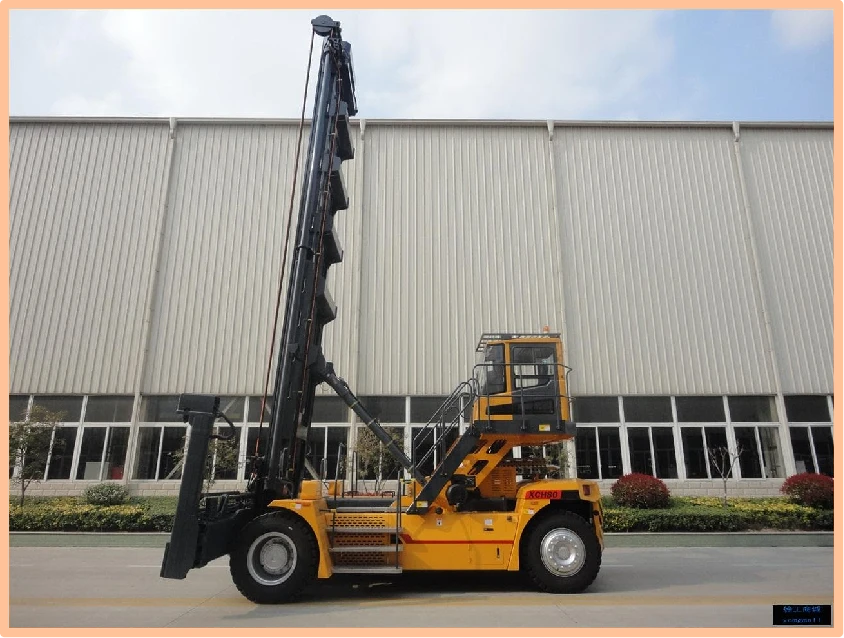
Powering port stackers and reach stackers for the efficient stacking and handling of heavy cargo; they deliver high-efficiency, precision, and reliability under heavy loads, significantly boosting port throughput.
Common Faults and Troubleshooting
The full power-shift transmission integrates precision hydraulic circuits, planetary gear sets, and an electronic control unit. Troubleshooting requires analyzing both electronic control signals and mechanical components, following a diagnostic logic that proceeds from the outside in to avoid indiscriminate disassembly.

1. Harsh Gear Shifting
Causes: Abnormal system oil pressure, stuck pressure regulating valve, worn clutch plates, delayed solenoid valve response.
Remedies: Check main oil circuit pressure, clean the valve body, inspect friction plate wear, and test solenoid valve power supply (24V) and operation.
2. No Gear Engagement / Vehicle Will Not Move
Causes: Oil pump failure, severe oil circuit blockage, clutch piston leakage, total solenoid valve failure.
Remedies: Check oil level and pressure, test solenoid valve wiring harness and power supply; disassemble the clutch assembly to inspect seals if necessary.
3. Excessive Oil Temperature / Oil Leakage
Causes: Blocked cooling circuit, fluid deterioration, aged oil seals, continuous clutch slippage.
Remedies: Clean the radiator and oil cooler, replace transmission fluid and filter, and replace aged oil seals or gaskets.
4. Abnormal Mechanical Noise
Causes: Worn bearing balls, pitting or spalling on gear tooth surfaces, excessive planetary carrier clearance.
Remedies: Completely disassemble the transmission to inspect the shaft assembly, gear meshing condition, and differential clearance.
Troubleshooting Principle: Follow the sequence of "electronic controls first, hydraulics second, and mechanics last." Prioritize checking hydraulic system pressure and electronic control signals; only after confirming these are correct should the disassembly of mechanical components be considered, so as to avoid causing secondary damage.
Key Points for Repair and Assembly
Precision friction components are the core of the transmission's power delivery system; assembly precision directly determines operational efficiency and service life. Every step requires rigorous adherence to standards-no negligence is permissible.
1. Disassembly Protocols: Parts must be clearly marked and stored in sorted categories; housings and shaft assemblies require ultrasonic cleaning to ensure oil passages are unobstructed and free of debris.
2. Pre-assembly Preparation: Friction plates must be soaked in transmission fluid for at least two minutes to ensure thorough saturation; all O-rings and piston seals must be replaced with new components.
3. Precision Assembly: Bolts must be tightened to specified torque values in multiple stages; bearing clearances and adjustment shims must be set strictly according to manual specifications to ensure precision standards are met.
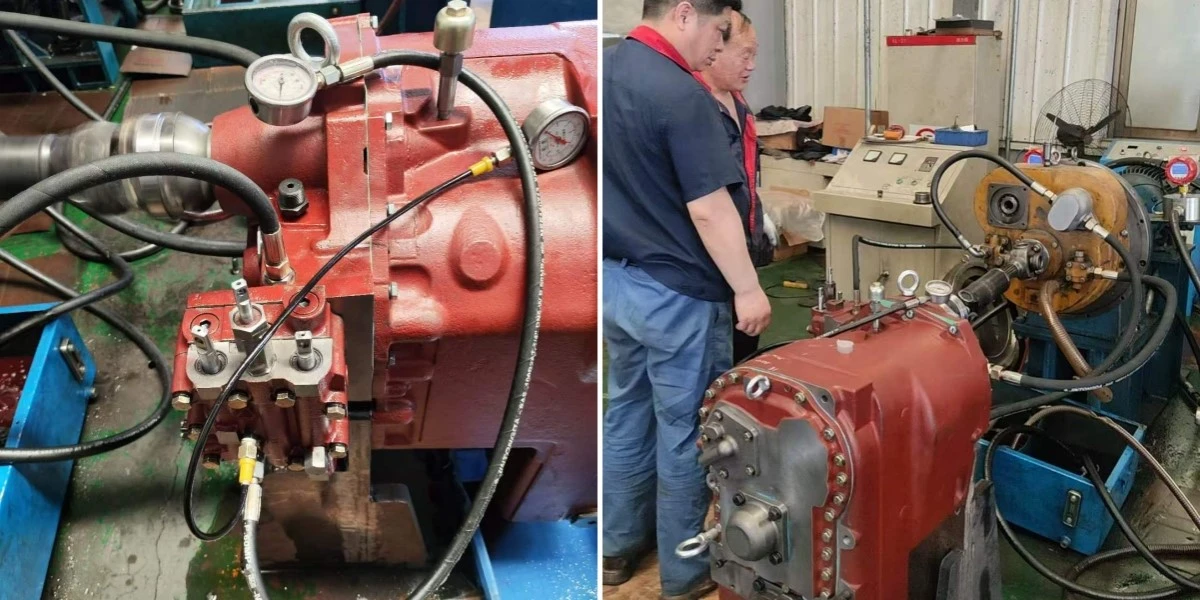
4. Bench Testing: Before vehicle installation and road testing, a no-load bench test is required to verify smooth clutch engagement and disengagement across all gears (without abnormal noise) and to confirm the absence of leaks.
5. Routine Maintenance: Regularly replace transmission fluid and filter elements while monitoring oil temperature and pressure in real-time; strictly avoid mixing different oil specifications to prevent abnormal component wear caused by fluid incompatibility.

Generate images/videos
Hot Tags: full power-shift transmission, China full power-shift transmission manufacturers, suppliers, factory, 220hp bulldozer transmission control valve, 220hp power shift transmission, 320hp dozer gearbox hydraulic valve, electronically controlled gearbox, heavy duty automatic gearbox, Wheel Loader Transmission


